Friday, May 21, 2010

7 Life Lessons Learned from Helen Keller


Helen Keller was an amazing woman. She was blind, deaf, and mute, yet that didn’t stop her from achieving her dreams.

Helen was not a person who made excuses, she made things happen. She is a constant reminder that anything is possible.

Despite her circumstances, Helen Keller became a world famous author, activist, and speaker. One of her many accomplishments includes being the first deaf-blind person to earn a Bachelor of Arts degree.

I believe we can learn a lot from Helen Keller. In fact here are 7 things we can learn from Helen Keller!

Go After Your Dreams  
“Life is either a daring adventure or nothing. Security is often a state of mind. ” 
I often tell people to go after their dreams and turn them into a reality. My skeptics would say, “That’s unrealistic,”. . . . but what’s the point of being “realistic.” 
Nothing great has ever been achieved by a “realist.”
Albert Einstein was not a realist, the Wright Brothers were not realists, Thomas Edison was not a realist, and Alexander Graham Bell was certainly not a realist. 
Question “realistic.” Take the limits off; go after your dreams. 
You Must Have a Vision
“It’s a terrible thing to see, and have no vision!”  
Do you have a vision, a goal, a plan, a mission for your life? Isaiah wrote that without a vision the people perish. Great leaders have to be visionaries, they have an internal picture of where they are going; they fixate on their vision and make course corrections as necessary. What’s your vision?

Nothing’s Impossible

“We can do almost anything we want to do, if we have a smart plan and stick to it long enough.”  
The beauty of “time” is that you can accomplish just about anything if you keep at it long enough. Set your mind on what you want to accomplish, and don’t stop until you get there. They say the usefulness of the postage stamp consists in its ability to stick to something until it gets there. Learn from the postage stamp; stay committed to your dream until you get there.
Experience is Priceless

“Life is a succession of lessons which must be lived to be fully understood.” 
Knowledge is necessary, but experience is priceless. Learn from all of life’s lessons! Never be afraid to get your hands dirty by getting some first-hand experience. Only experience can bring full understanding.
Focus on the Positive

“Although the world is full of suffering, it is full also of the overcoming of it.” 
Although we could focus on the negative things around us, it doesn’t do us much good. Helen Keller said, “Keep your face to the sunshine and you will never see the shadow.” I think this is good advice. Make the decision to see glass as “half-full." 
Hang-out with Winners

“While they were saying among themselves it cannot be done, it was done.” 
Winners hang-out with winners. Plain & simple . . . .  do not hang-out with negative people. Negative people are like “vampires,” they suck the life from everything around them. They will tell you “how you can’t, why you can’t, and how you’re going to fail when you try.” If you spend time with these “chickens” for too long, you’ll forget that you have the ability to soar like an eagle. 
Your Destiny is in Your Hands

“What I am looking for is not “out there,” it is in me” 
Everything you need to succeed, you already have inside of you. Shakespeare wrote, "The fault dear Brutus, lies not in our stars that we are underlings, but in ourselves."
Success that is integrity based is yours for the taking, but you have to: 
believe it 
make a plan   
be consistent in your effort   
adjust your course for correction 
never, ever give up

The next time you think something can’t be done, remember Helen Keller.

“One can never consent to creep when one feels an impulse to soar.” – Helen Keller


Monday, May 10, 2010

Notes from the 39th Century on the Perils of Partial Evidence

by Roger Pearse
Some may know that I occasionally receive scholarly papers from the 39th century.  Unfortunately it is impossible for me to reply, and consequently I see some curious errors made about 20th century America because of the limited survival of evidence to that period.
The paper that has come before me is incomplete, but discusses a curious feature of 20th century US society, from impeccable references.
At this period every American citizen seems to have owned a donkey, and it seems to be understood that the animal is kept close by at all times.  There are copious references in the literature to this.
In a ballad entitled Stone Sun, listing various pleasures, the line occurs: “I’m gonna dress my ass in the latest fashion.”  From this we learn that the donkeys were dressed in some manner, and that the status of the owner would depend on the degree to which the donkey was kept attired in the latest fashions.
In the fragmentary play “Total Recall” by Arnold Blackegg, the line “Get your ass to Mars” appears; the hero must take the animal even in his space-craft.  It must be admitted that it is unclear how this could have been practical in the supposed space-missions of the period, and is one argument for considering all these to be fictional.
The animal was clearly very important.  In another play, the hero invites the villain scornfully to “kiss his ass”.  It must be presumed that this reflects some ceremony not otherwise known to us.  Later one of the players states his intention to “kick the ass” of someone else.  A similar idea appears in “I am going to  get medieval on his ass,” presumably indicating harmful intentions.
People of low status might sell their donkey.  Studies of the term “sell your ass” have tended to suggest that in fact outright sale was not involved, even then; but rather a rental agreement.  Only the most degraded would do this, it seems, but that it did occur is agreed by all who have written on the subject.
However archaeological examinations of American tenement blocks reveal a total lack of facilities to keep this essential animal.  Despite the lack of literary evidence, therefore, we must presume that only those who had already sold their ass could work for major corporations and live in large cities.  Whether they recovered their donkey on retirement is unknown.

source: http://www.roger-pearse.com/weblog/?cat=100

Friday, April 9, 2010

Shlemiel! Shlimazel!

Is the limit to your Yiddish the intro song to Laverne and Shirley?
Remember, the limits of your language are the limits of your world. :-)


Yiddish: An amalgam of medieval German dialects, Yiddish was first used in the Jewish ghettos of Eastern Europe. By the 20th century over 11 million people spoke Yiddish.

Note: Yiddish is written in the Hebrew alphabet thus the spellings in this glossary are transliterations.
All the RED entries are phrases or words I commonly use. If it's in BLUE it is a word I am definitely going to add to my vocabulary! How about you?

Borsht belt: A term used by entertainers to describe hotels in the Catskill Mountains of New York State, with an almost entirely Jewish clientele, who are fond of borsht.
Boychik: A young boy (term of endearment).
Bris: Circumcision.
Broygis: Not on speaking terms.
Bubbee: A friendly term for anybody you like.
Bubeleh: Endearing term for anyone you like regardless of age.
Bupkis: Nothing. Something totally worthless. (Literally "Beans")
Chanukah: Also known as the "Festival of Lights," commemorates the rebuilding of the temple in Jerusalem. Chanukah is celebrated for eight days during which one additional candle is added to the menorah on each night of the holiday.
Chachkas: see - Tchotchkes 
Chutzpeh: Brazenness, gall.
Cockamamie: Crazy; ludicrous
Drek: Human dung, feces, manure or excrement; inferior merchandise or work; insincere talk or excessive flattery
Faigelah: Bird (also used as a derogatory reference to a gay person).
Farkuckt (taboo): Dungy, shitty
Farshlugginer: Refers to a mixed-up or shaken item. Generally indicates something of little or dubious value.
Feh!: Fooey, It stinks, It's no good.
Gelt: Money
Gevalt!: Heaven Forbid! (Exclamatory in the extreme.)
Glick: Luck, piece of luck
Glitch: A minor malfunction:
Goy: Any person who is not Jewish
Goyeh: Gentile woman
Goyim: Group of non-Jewish persons
Gunsel: A young goose. Also used to describe a young man who accompanies a tramp or a young tramp.
Ipish: Bad odor, stink
(To) Kibbitz: To offer unsolicited advice as a spectator
Kibbitzer: Meddlesome spectator
Kish mir en toches: Kiss my backside (slang)
(A) Kitsel: Tickle
Klutz (klotz): Ungraceful, awkward, clumsy person; bungler
K'nishes: Baked dumplings filled with potato, meat, liver or barley
Kolboynik: Rascally know-it-all
Kosher: Jewish dietary laws based on "cleanliness". Also referring to the legitimacy of a situation. "This plan doesn't seem kosher".
K'vetsh: Whine, complain; whiner, a complainer
Leck, shmeck: Done superficially (Literally, "lick, smell")
L'chei-im, le'chayim!: To life! (the traditional Jewish toast); To your health, skol
Mazel Tov: Good Luck (lit) Generally used to convey "congratulations".
Mentsh: A special man or person. One who can be respected.
Meshugeh: Crazy
Meshugeneh: Mad, crazy, insane female.
Meshugener: Mad, crazy, insane man
Mish mash: Combination, mess, hodgepodge:
Mitzvah: Good deed; a gift to help one in get started in their career or future
Moyel: Person (usually a rabbi) who performs circumcisions.
Nebbish: A nobody, simpleton, weakling, awkward person
Nosh: Eat, snack
Nudnik: Pesty nagger, nuisance, a bore, obnoxious person
Nudje: Annoying person, badgerer (Americanism)
Oi!!: Yiddish exclamation to denote disgust, pain, astonishment or rapture
Oi, gevald: Cry of anguish, suffering, frustration or for help
Oi, Vai!: Dear me! Expression of dismay or hurt
Petseleh: Little penis
Phooey! fooey, pfui: Designates disbelief, distaste, contempt
Plotz: To burst, fall over
Prost: Coarse, common, vulgar
Putz: Slang word for "penis." Also used when describing someone someone as being "a jerk."
Rabbi: Teacher
Rav: Rabbi, religious leader of the community
Reb: Mr., Rabbi; title given to a learned and respected man
Shikseh: Non-Jewish girl
Shiva: Mourning period of seven days observed by family and friends of deceased
Shlang: Snake, serpent; a troublesome wife; penis (taboo)
Shlemiel: Clumsy bungler, an inept person, butter-fingered; dopey person
Shlep: Drag, carry or haul, particularly unnecessary things, parcels or baggage; to go somewhere unwillingly or where you may be unwanted
Shlimazel: Luckless person. Unlucky person; one with perpetual bad luck (it is said that the shlemiel spills the soup on the shlimazel!)
Shlub: A jerk; a foolish, stupid or unknowing person, second rate, inferior.
Shlump: Careless dresser, untidy person; as a verb, to idle or lounge around
Shmaltz: Grease or fat; (slang) flattery; to sweet talk, overly praise, dramatic
Shmaltzy: Sentimental, corny
Shmeer: The business; the whole works; to bribe, to coat like butter
Shmendrik: nincompoop; an inept or indifferent person; same as shlemiel
Shmo(e): Naive person, easy to deceive; a goof (Americanism)
Shmooz; (shmuess): Chat, talk
Shmuck (tabboo): Self-made fool; obscene for penis: derisive term for a man
Shmuts: Dirt, slime
Shnook: A patsy, a sucker, a sap, easy-going, person easy to impose upon, gullible
Shnooker: to pull the wool over someone's eyes, to bamboozle, to fool
Shnorrer: A beggar who makes pretensions to respectability; sponger, a parasite
Shpiel: Play
Shtik: Piece, routine: a special bit of acting
(A) Shtunk: A guy who doesn't smell too good; a stink (bad odor) a lousy human
Shtup: Push, shove; vulgarism for sexual intercourse
Shule: School
Shvantz: tail, penis
Talmud: The complete treasury of Jewish law interpreting the Torah into livable law
Talmud Torah: The commandment to study the Law; an educational institution for orphans and poor children, supported by the community; in the United States, a Hebrew school for children
Tchotchkes: Little playthings, gadgets, ornaments, bric-a-brac, toys; the kind of cheap trinkets you'd pick up for free as a promotion item at a booth in a Trade Show (see also: chachkas)
Toches: Buttocks, behind, fanny (ass)
Tsatskeh: Doll, plaything; something cute; an overdressed woman; a sexy girl
Tshatshki: Toy, doo-dad
Verklempt: Extremely emotional. On the verge of tears. (See "Farklempt")
Vi gaits?: How goes it? How are things? How's tricks?
Vos iz?: What's the matter?
Yarmelkeh: Traditional Jewish skull cap, usually worn during prayers; worn at all times by observant Orthodox Jews.
Yenteh: Gabby, talkative woman; female blabbermouth
Yom Kippur: Day of Atonement (the most holy of holy days of the Jewish calendar)
Zol zein!: Let it be! That's all!


Sunday, April 1, 2007

Godspell Movie Collage

I first saw Godspell in 1971. I think my Mom took me back at least 2 more times . . .seems we saw it over and over.
I was young but I remember it so well! It became my benchmark performance. None have ever matched the expereince of that first Broadway Production.
Since then I have seen and been part of Godspell productions on numerous occasions. This production of Godspell at Northwoods is my youngest cast but they are amazing me daily.
This clip is a collage from the movie. OK, the movie is corny in its own wonderful way. And it is extremely dated (1970s) but the performance of the character Jesus remains one of my favorites. The innocence, purity and kindness flow in his performance.

Monday, March 19, 2007

The Common Question

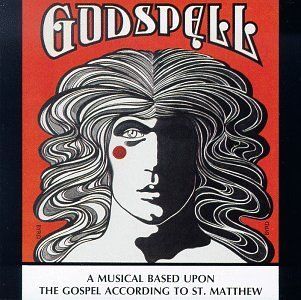
What is Godspell, you ask?

Godspell is the story of Jesus and the community of believers he brought into existence. God's good news often sneaks into our lives on the wings of laughter, and that is the intent of this musical. It's a comedy ... and yet, if you listen, God speaks and we hear.

Saturday, March 10, 2007

Government Site for Kids


Find links to government and other kids' sites

http://www.kids.gov/

A wealth of information and links

Thursday, February 22, 2007

Red Barn and White House

 
This looks so much like my farm north of the woods!